Kontractis: Designing a Subcontractor Compliance MVP From Scratch

Kontractis: Designing a Subcontractor Compliance MVP From Scratch

Kontractis: Designing a Subcontractor Compliance MVP From Scratch

Outcome

Web platform

Web platform

Year

2025

2025

Industry

Compliance & Procurement SaaS

Compliance & Procurement SaaS

Kontractis automates subcontractor compliance. It collects, verifies with AI and renews the five legal certificates companies must hold for their suppliers: KBIS, RC Pro, URSSAF, tax certificates and more.

I worked on the product from scratch as an MVP. The goal was to turn a tedious, legally risky admin task into something that runs almost on autopilot.

I designed the first version of the platform, from supplier onboarding to the one-click L.8222-1 compliance report.


Process & Approach

The design process focused on the people who carry the compliance burden:

  • User research: Talking to procurement and admin teams who chase certificates by email every month

  • Journey mapping: Following a document from request and upload to AI check and renewal

  • MVP definition: Focusing the first release on collection, verification and reporting

  • Prototype testing: Validating the supplier upload flow with real subcontractors

The Challenge

Kontractis had to solve several problems in its very first version:

  • Manual chasing: Teams spent hours requesting and tracking certificates by email

  • Legal risk: Expired documents expose companies to joint financial liability

  • Two audiences: Both the client company and its suppliers needed a simple experience

  • Trust in automation: Users had to understand and trust AI verification results


Solution

The MVP delivered a clear, focused experience:

  • Compliance dashboard: A single view of every supplier with clear valid, expiring and missing states

  • Frictionless supplier portal: Subcontractors upload documents in minutes without creating complex accounts

  • Transparent AI checks: Verification results explained in plain language, with manual review when needed

  • One-click reporting: The L.8222-1 report generated instantly for audits

  • Reusable foundations: A lean component library ready for future modules

Key Takeaways

This project demonstrated that:

  • Automation needs clarity: AI features only earn trust when users can see why a decision was made

  • Design for both sides: Making suppliers’ lives easier is what keeps compliance data complete

  • Status is everything: Clear, consistent states turn a legal obligation into a quick daily check

  • Start lean, build solid: A focused MVP on strong foundations leaves room to grow

Kontractis shows how a well-scoped MVP can turn a stressful legal obligation into a calm, automated routine.

‹ Previous

Industry :

AI based appliance

Type :

AI

Work :

Product design

AI

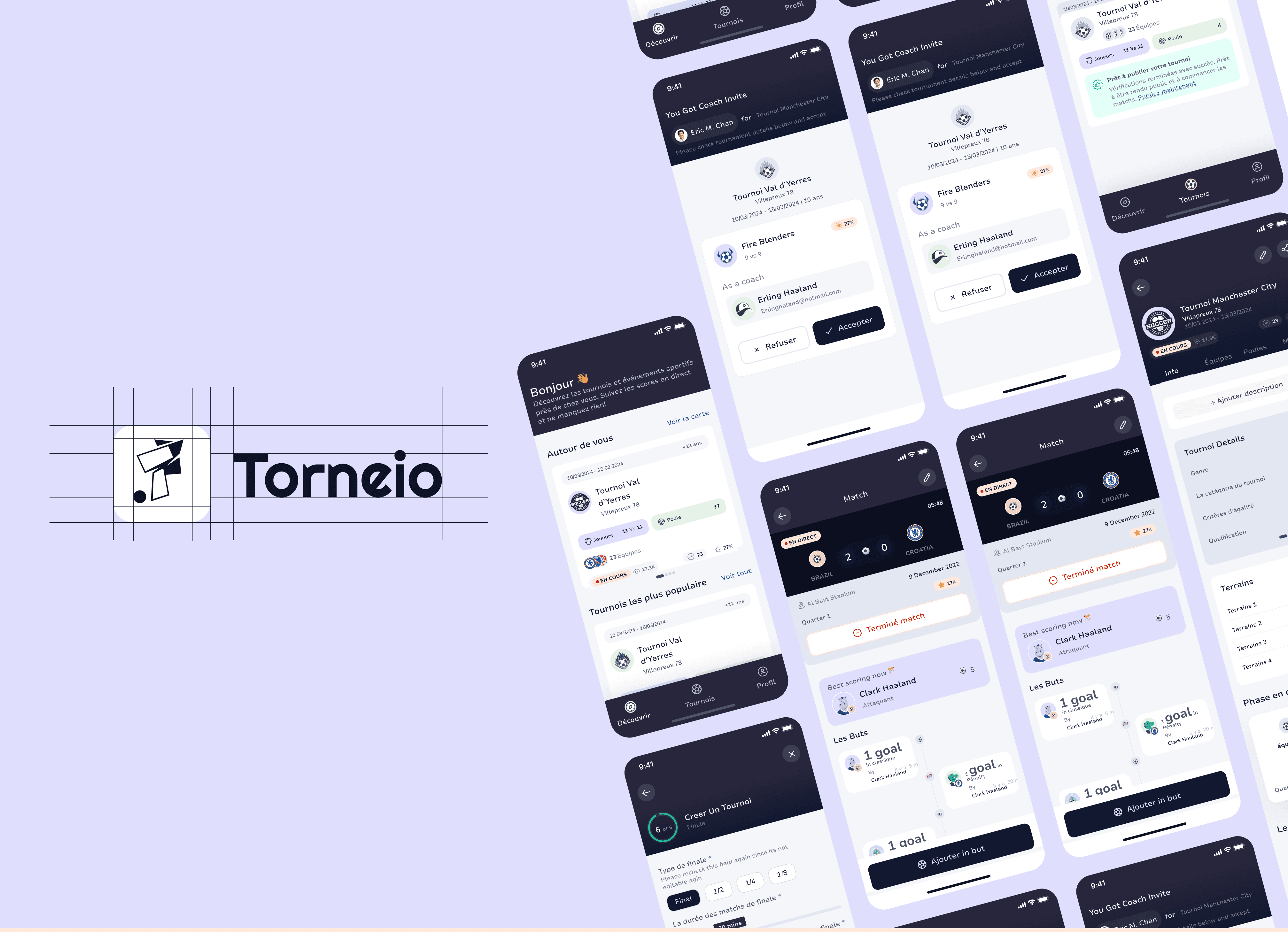
Torneio Mobile App: Streamlining Tournament Management & Community Engagement

Torneio is a mobile-first platform designed to simplify the creation, management, and experience of competitive tournaments for local sports leagues, esports communities, and social gaming groups. This case study examines the user-centered design process that transformed a complex logistical challenge into an intuitive, community-driven mobile application, complete with a system for promotional collateral to drive growth.

Process & Approach

The design followed an iterative, research-backed methodology tailored to the dynamic needs of tournament organizers and participants.

  1. Domain & User Research: Conducted interviews with tournament organizers from various fields (sports, esports, community groups) to understand deep pain points like manual scheduling and poor communication. Analyzed competitors to identify gaps in mobile experience and flexibility.

  2. Information Architecture & User Flows: Mapped primary flows for organizers (create, manage, promote) and participants (discover, register, track). A core insight was designing for open registration, where the bracket generates automatically after sign-ups close.

  3. Mobile-First Prototyping: Prioritized designing for the small screen from the outset, ensuring core actions like score entry and schedule checks were effortless on the go.

  4. Collateral System Design: Developed a parallel design system for promotional materials (social media graphics, posters) that organizers could auto-generate from their tournament setup to ensure brand consistency and reduce marketing effort.

  5. Usability Testing & Iteration: Tested interactive prototypes with target users, leading to critical changes like enlarging touch targets for mobile and adding payment tracking features.

Torneio.co

Next ›

Industry :

AI based appliance

Type :

AI

Work :

Product design

AI

Gravity: Developer-Centric Kubernetes UI/UX

Gravity is a self-service developer platform that simplifies the Kubernetes experience while maintaining complete control for technical users. This case study examines the UI/UX design decisions that transformed complex container orchestration concepts into an intuitive interface that bridges the gap between platform teams and developers.

Process & Approach

The design process followed a developer-centric approach to creating a technical yet accessible interface:

• User Research: Identifying the distinct needs of both platform engineers and application developers

• Mental Model Mapping: Translating complex Kubernetes concepts into visual metaphors and workflows

• Information Architecture: Organizing technical functionality into logical, discoverable patterns

• Visual System Development: Creating a cohesive design language that balances technical precision with usability

• Iterative Testing: Validating interface effectiveness with users of varying technical proficiency

invisibl.io/gravity

Let’s
work
together

to Build Something Amazing!

Turning ideas into delightful experiences since 2018.

Built with curiosity by Sunandhan Mayavan | © 2025

Built with curiosity by Sunandhan Mayavan | © 2025

with

with